Mercedes-Benz
The Best or Nothing
Mercedes-Benz
The Best or Nothing
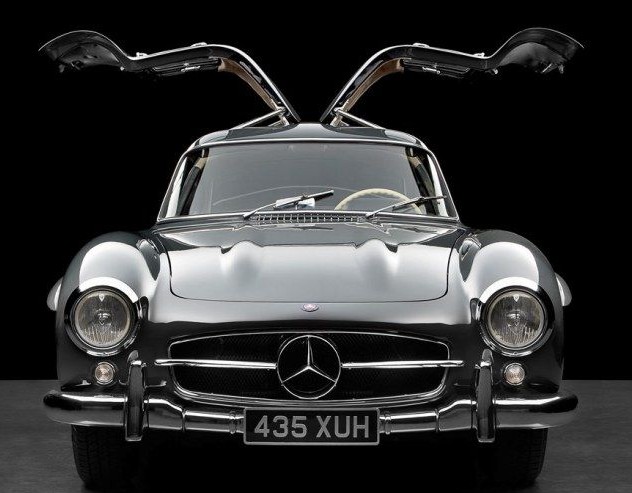
The success story continued in 1954 with the 300 SL “Gullwing”, a coupé that turned the heads of sports car enthusiasts with its unique design and extraordinary power. The roots of the car’s development lay in the USA: “What we need over here is a great Mercedes-Benz sports car,” US importer Maximilian Hoffman is reported to have said. In September 1953 he convinced the Board of Management at Daimler-Benz to build a series version of the successful 300 SL racing sports car. Incredibly, just five months later in February 1954, the Mercedes-Benz 300 SL (W 198) made its sensational debut at the International Motor Sports Show in New York. The new sports car exuded elegance and innovation in equal measure.
It was the world’s first four-stroke production passenger car to be equipped with output- and efficiency-enhancing direct fuel injection. Breath-taking engine output of 215 hp (158 kW) provided a top speed of 250 km/h, depending on final drive ratio. That made the 300 SL the fastest production car of its day. As with the legendary racing sports car from the 1952 season, the vehicle featured consistent lightweight design throughout and a spaceframe that supported the engine, transmission and axles and left no room for conventional doors.
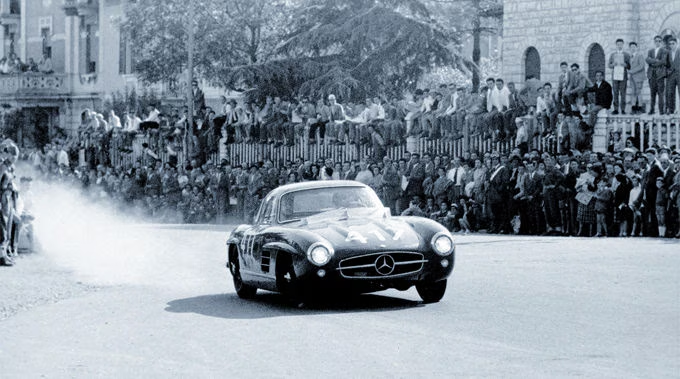
Breath-taking engine output of 215 hp (158 kW) provided a top speed of 250 km/h, depending on final drive ratio. That made the 300 SL the fastest production car of its day.
As with the legendary racing sports car from the 1952 season, the vehicle featured consistent lightweight design throughout and a spaceframe that supported the engine, transmission and axles and left
no room for conventional doors.
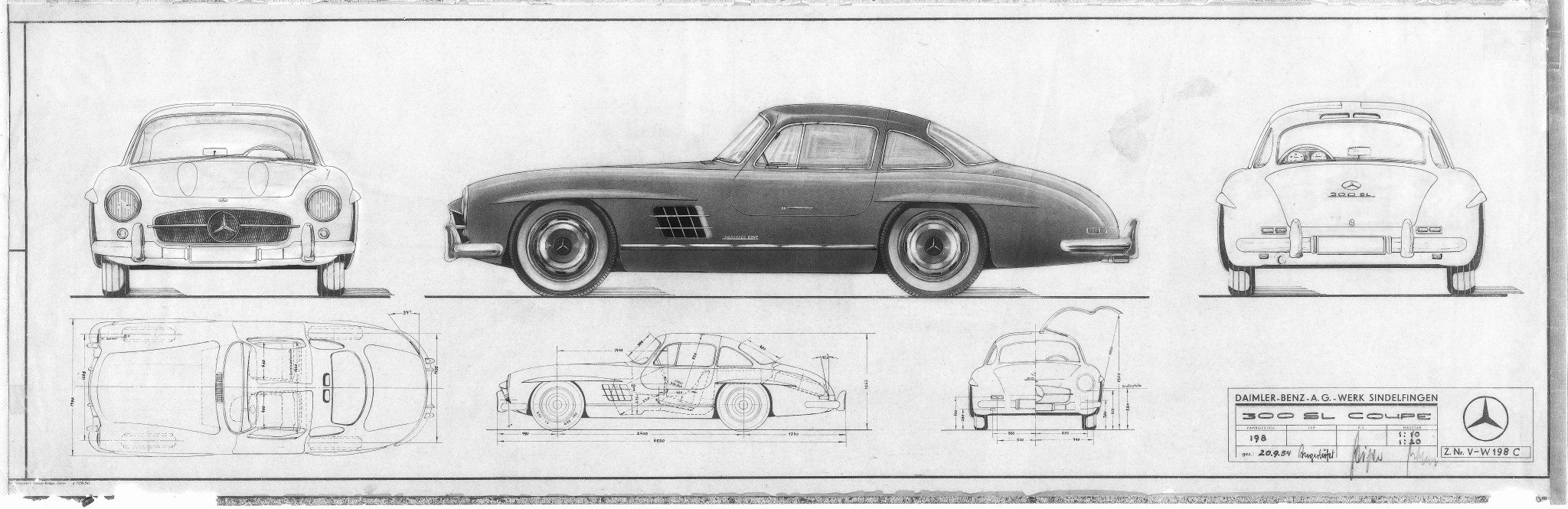
Designed by Friederich Geiger
In September 1953
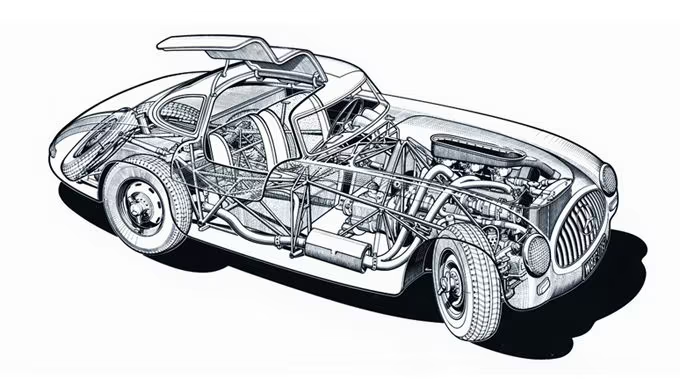
The 300 SL has a steel tubular frame chassis, with a steel body combined with an aluminum bonnet, doors, dashboard, and boot lid to further reduce weight. An additional 80 kilograms (176 pounds) could be eliminated with an expensive all-aluminum body, but only 29 were made.[4] Depending on the rear axle ratio, fuel consumption was 17 liters per 100 km (14 miles per US gallon; 17 miles per imperial gallon).
Three checkered-pattern seat fabrics were standard: grey and green, grey and blue, and cream and red.[15] Most
customers opted for leather upholstery, which became standard on the roadster. With upward-opening doors,
the coupé has an unusually-high sill; entering and exiting the car is problematic.
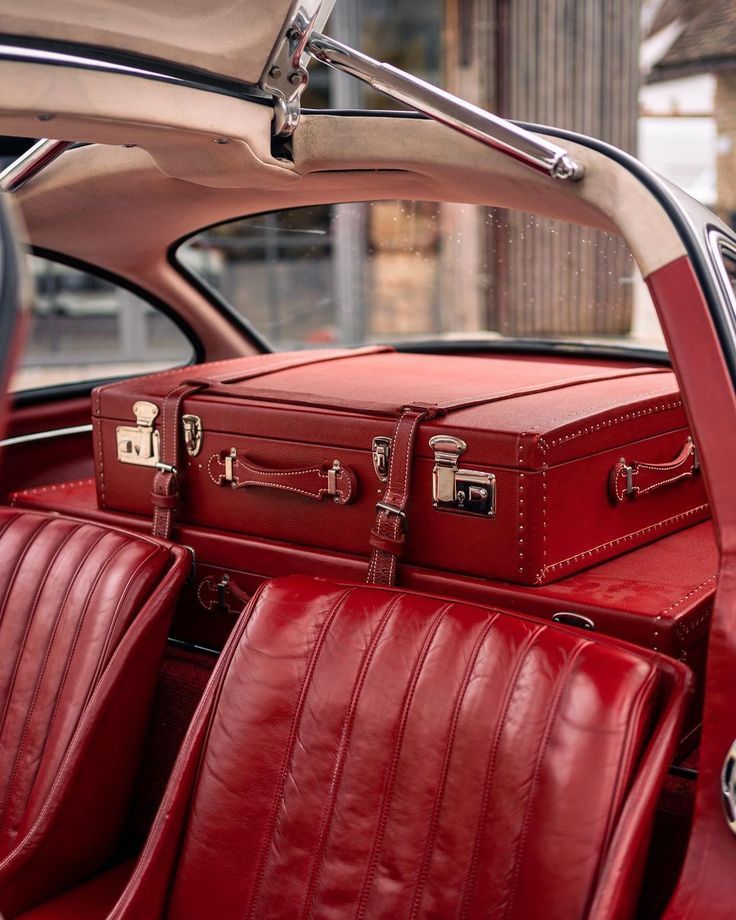
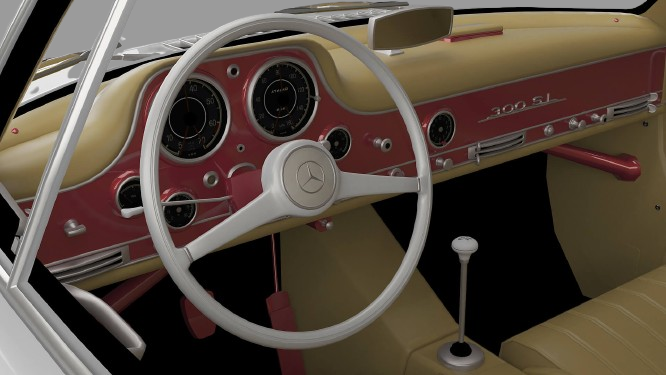
The steering wheel pivots on its hub 90 degrees away from the dashboard to facilitate entry.[16] Storage space for luggage is behind the seats in the coupé; the boot only holds a spare wheel and fuel tank. The roadster was available with two custom-fitted leather suitcases for the larger boot. The coupé's windows are fixed and roll down in the roadster.
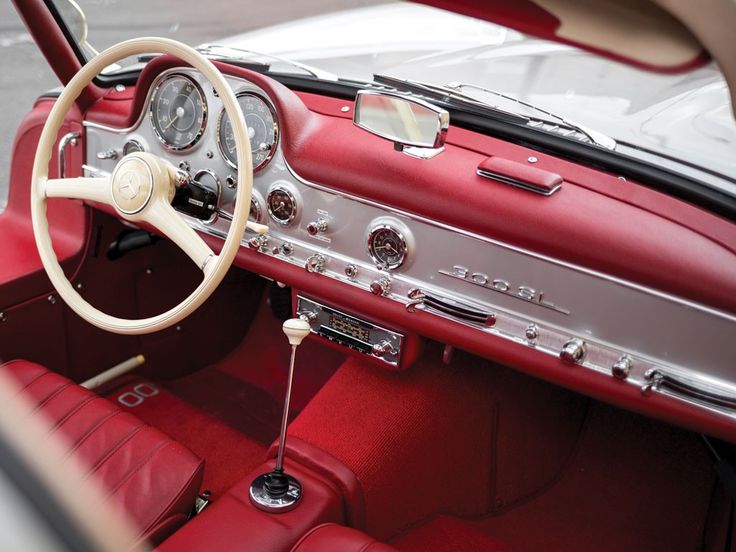
Leather seats were optional.
A resplendent red leather interior is one of the
highlights of the German icon.
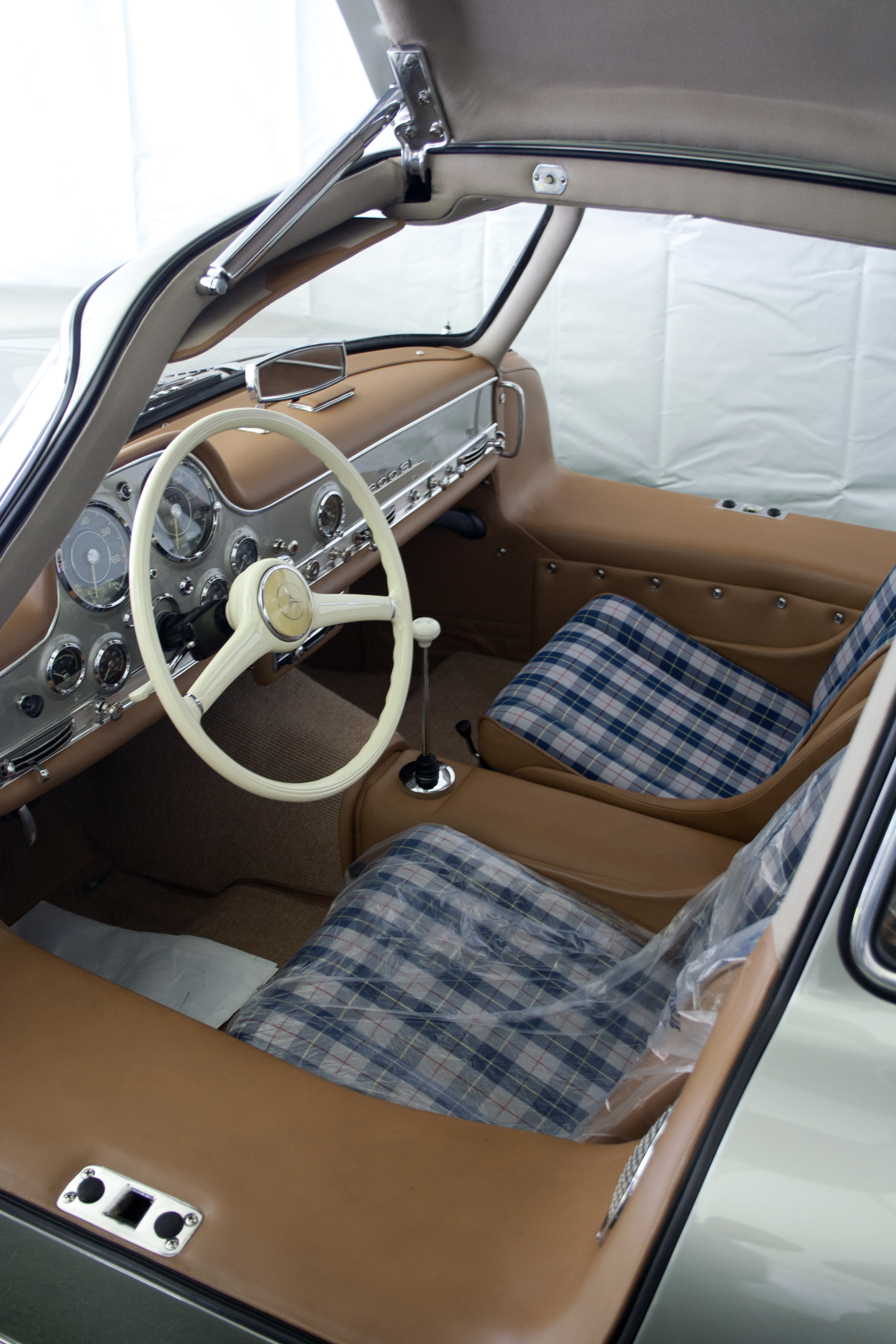
Fabric seats were standard in the coupé
in a distinctive plaid pattern.
Storage space for luggage is behind the seats in the coupé;
the boot only holds a spare wheel and fuel tank
The body consists mainly of sheet steel, with the bonnet, boot lid, dashboard, sill, and door skins made of aluminum. Silver-grey was the standard color; all others were options.[17] The car’s distinctive eyebrows are a functional feature in the front,[18][19] both physically and aerodynamically deflecting road water from the windscreen,[20] and stylistic in the rear, added for visual symmetry.[21]
It was the world’s first four-stroke production passenger car to be equipped with output- and efficiency-enhancing direct fuel injection. Breath-taking engine output of 215 hp (158 kW) provided a top speed of 250 km/h, depending on final drive ratio. That made the 300 SL the fastest production car of its day. As with the legendary racing sports car from the 1952 season, the vehicle featured consistent lightweight design throughout and a spaceframe that supported the engine, transmission and axles and left no room for conventional doors.
.jpg)
.jpg)
.jpg)
.jpg)
.jpg)
Steering power
300 sedan
Steering Effort
20-30 lbs
Steering Type
Recirculating Ball (Manual)
Turning Circle
11.5 meters
Lateral Acceleration
0.8-0.9g
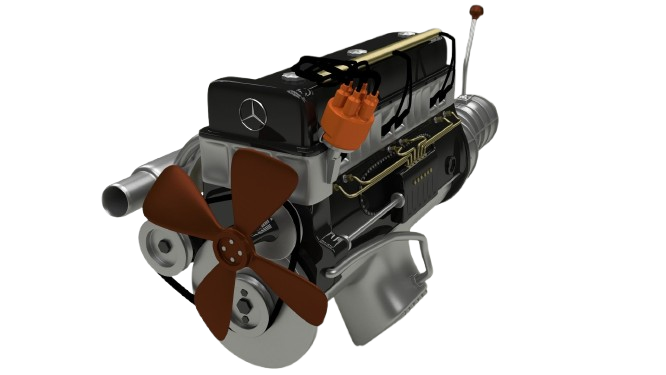
Production
1951–1967
Displacement
3.0 L; 182.8 cu
in (2,996 cc)
Power output
115–240 bhp (86–179 kW)
Fuel type
Gasoline
Cylinder head
Aluminum
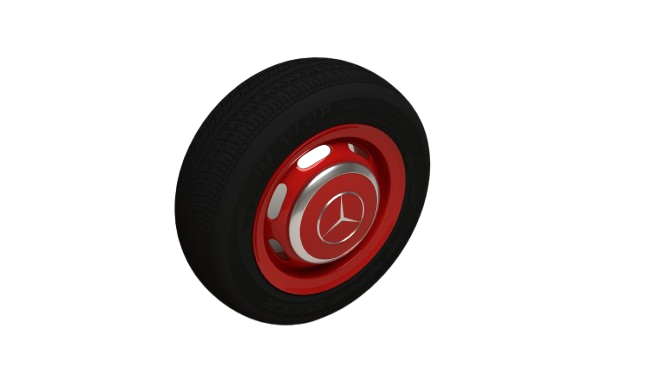
Wheelbase
2,400 mm (94.5 in)
Load index
91 (615kg.)
Produced number
1400
Speed rating
V ( 149mph / 240 kph )
Size
225/55R16
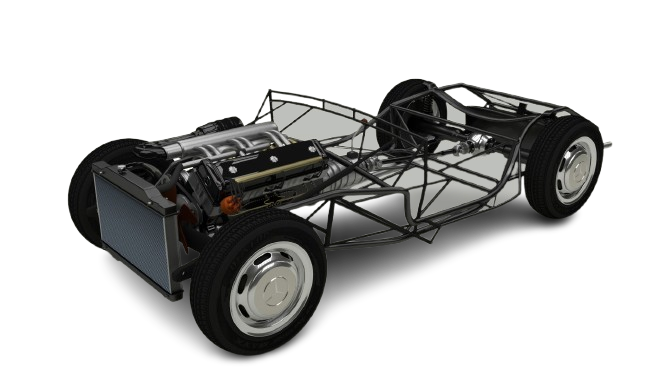
Suspension
four-wheel independent
Brakes
227.9 sq in
Weight
82 KG
Material
chrome-molybdenum
steel
Type
Tubular frame
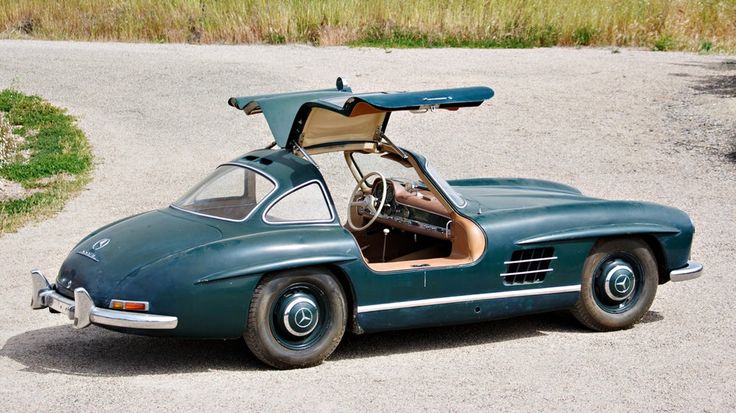
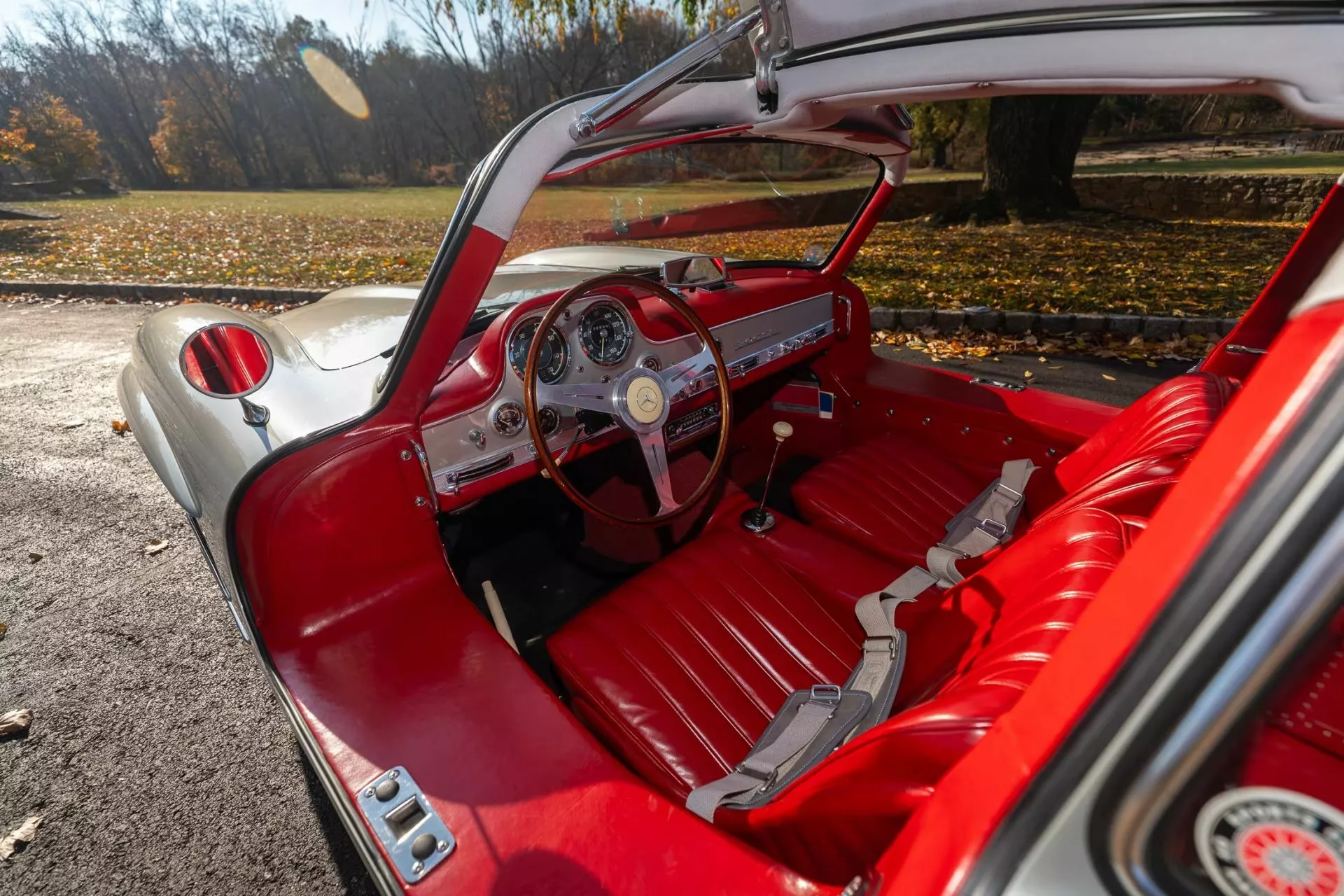
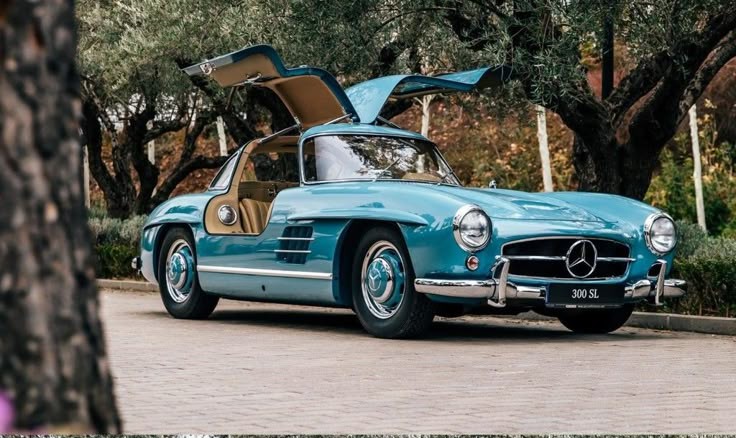
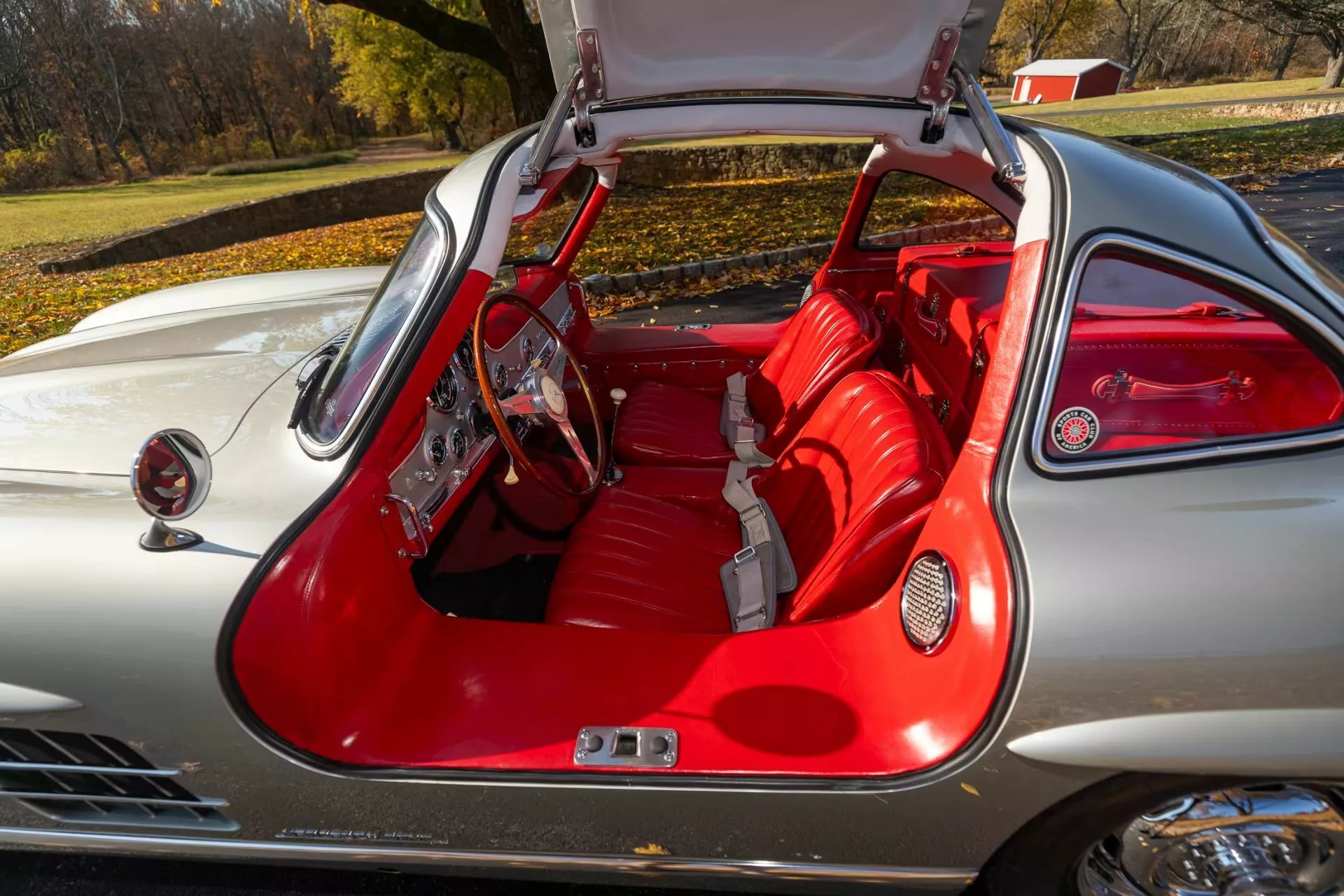
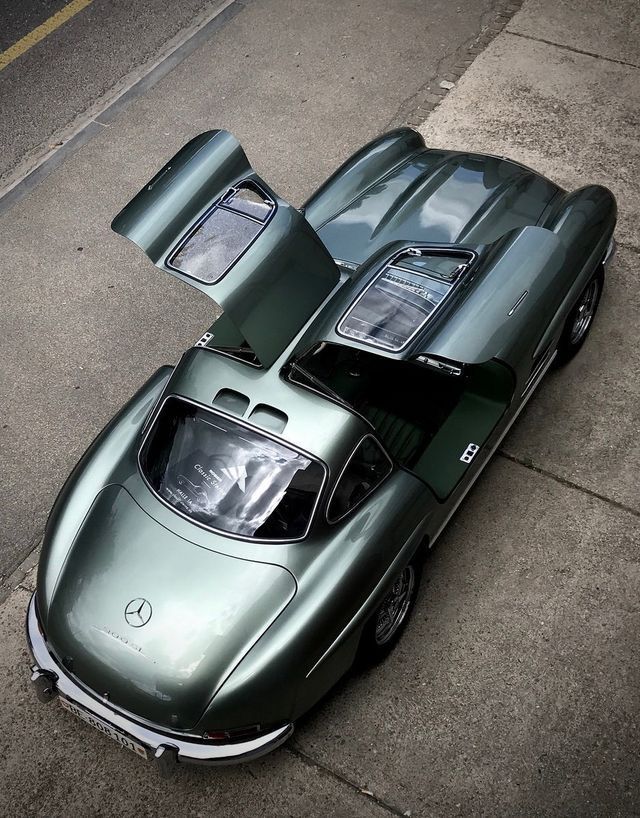
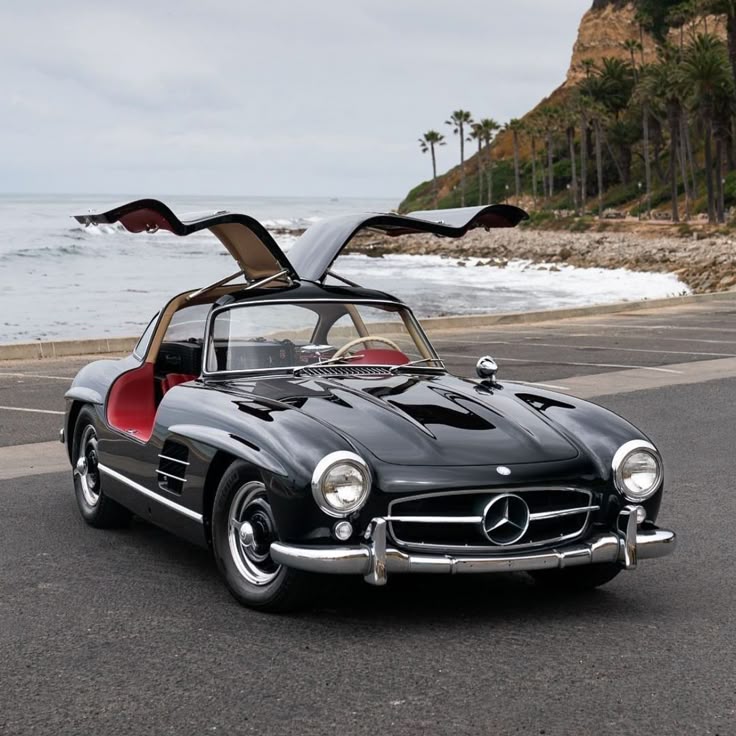
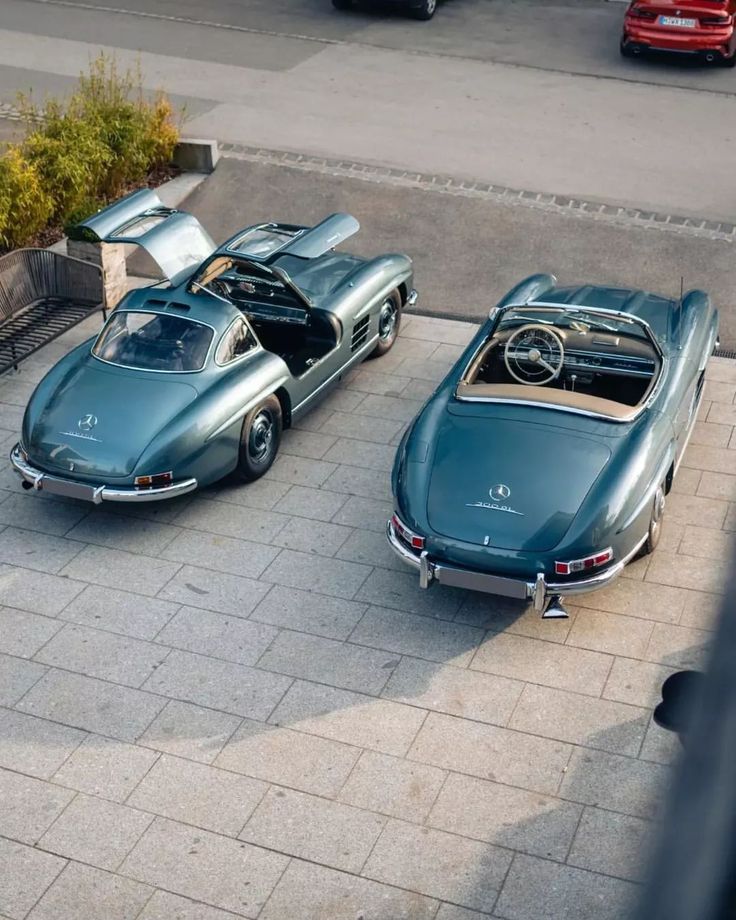
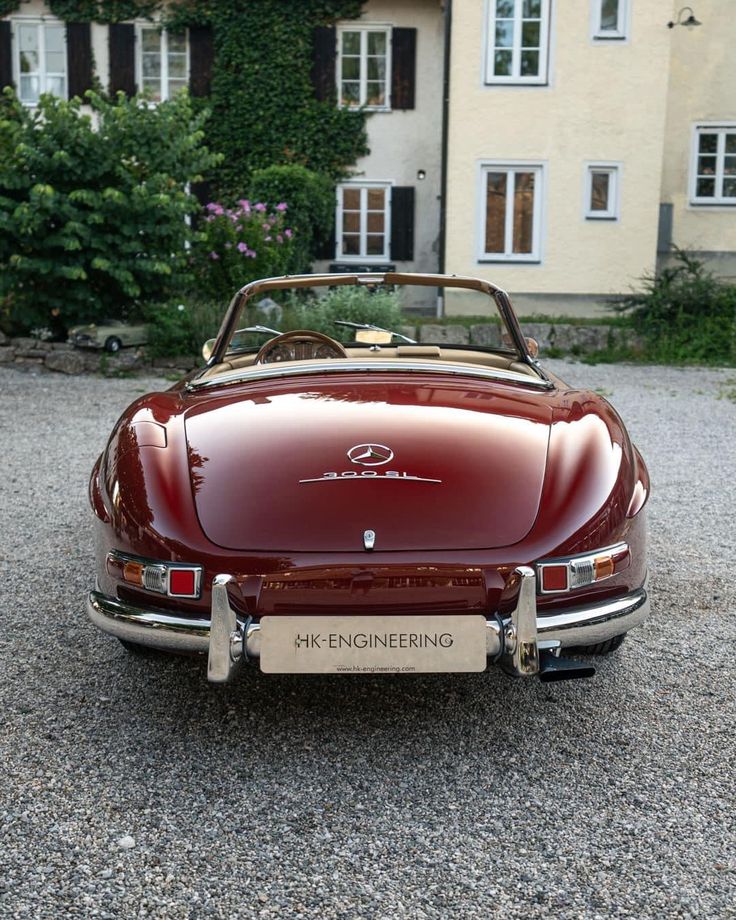
These are some photos of the amazing and revolutionary Mercedes-Benz 300 SL , with its different colors that suits all the tastes
This Website is about the original 300 SL. For the 300 SL produced from 1985 to 1989, see Mercedes-Benz R107 and C107.
For the 300 SL made from 1989 to 1993, see Mercedes-Benz SL-Class (R129).
if You want to know more about the Mercedes-Benz 300SL , you can visit these resources :
https://en.wikipedia.org/wiki/Mercedes-Benz_300_SL
https://www.carscoops.com/2025/01/pristine-1957-mercedes-benz-300sl-gullwing-is-worth-spending-nearly-2-million/
https://www.motortrend.com/reviews/mercedes-benz-300-sl-supercar-drive-st-moritz-automobile-week/photos/